Let’s be honest. We’ve all been there. You’ve just bought a stunning new dress online. It looked perfect on the model, and you imagined yourself looking effortlessly chic at your next brunch in Colombo or a weekend getaway down south. Then, you wear it. You step outside into that familiar, warm, humid Sri Lankan air, and within minutes, the fabric is clinging to you, you feel a sheen of sweat, and all that chicness evaporates into a cloud of sticky discomfort. It’s a fashion tragedy we know all too well.
The truth is, in a tropical paradise like ours, not all fabrics are created equal. The secret to looking and feeling cool, calm, and collected—no matter what the thermometer says—lies in understanding one crucial thing: fabric. Making smart fabric choices is the ultimate style hack for the modern Sri Lankan woman. It’s the difference between a wardrobe full of clothes you love to wear and a closet full of regrettable online purchases.
This is your ultimate 2026 guide to mastering the art of dressing for our climate. We're diving deep into the world of **breathable fabrics for Sri Lanka**, decoding the labels, and empowering you to build a stylish, modern wardrobe that truly works for you. Say goodbye to purchase anxiety and hello to looking fabulous, without breaking a sweat.

The Holy Trinity of Breathable Fabrics: Your Tropical Wardrobe Champions
When navigating the world of **women's fashion online in Sri Lanka**, there are three powerhouse fabrics you should always have on your radar. These natural wonders are the foundation of any intelligent tropical wardrobe, prized for their ability to let your skin breathe. Think of them as your personal air-conditioning system, woven into a beautiful garment.
Cotton: The Unbeatable Classic
There's a reason cotton is the king of comfort. This natural fibre, derived from the cotton plant, is a true champion in the heat. It's soft, hypoallergenic, durable, and most importantly, incredibly breathable. Cotton fibres are absorbent, meaning they can draw moisture (a.k.a. sweat) away from your skin, helping it to evaporate and keeping you feeling cooler and drier. But not all cotton is the same!
Understanding the different weaves of cotton can elevate your shopping game from amateur to pro:
- Cotton Voile & Lawn: Imagine a feather-light, slightly sheer fabric that feels like a whisper against your skin. That's voile and lawn. They are perfect for breezy blouses, tiered maxi dresses, and floaty tops that won’t weigh you down.
- Cotton Poplin: This is your go-to for a more structured look. Poplin has a crisp, smooth finish that makes it ideal for modern shirt dresses and tailored shirts that need to look sharp for the office, yet remain comfortable through the commute.
- Chambray: Love the look of denim but not the heat? Meet chambray. It's a lightweight cotton fabric with a similar woven appearance to denim but is infinitely more breathable, making it a fantastic choice for casual shirts and day dresses.
- Eyelet (Broderie Anglaise): This isn't just a fabric; it's a design feature with a purpose. The small, embroidered cut-outs in eyelet cotton provide built-in ventilation, making it one of the most practical and beautiful **summer clothing materials**. It adds a touch of romantic, feminine texture to any outfit. A gorgeous eyelet top is a non-negotiable for a chic, heat-proof wardrobe. For a perfect example of style meeting function, a piece like this Cutlon Eyelet Peplum Wrap Blouse is a true game-changer.
Linen: The Epitome of Effortless Tropical Chic
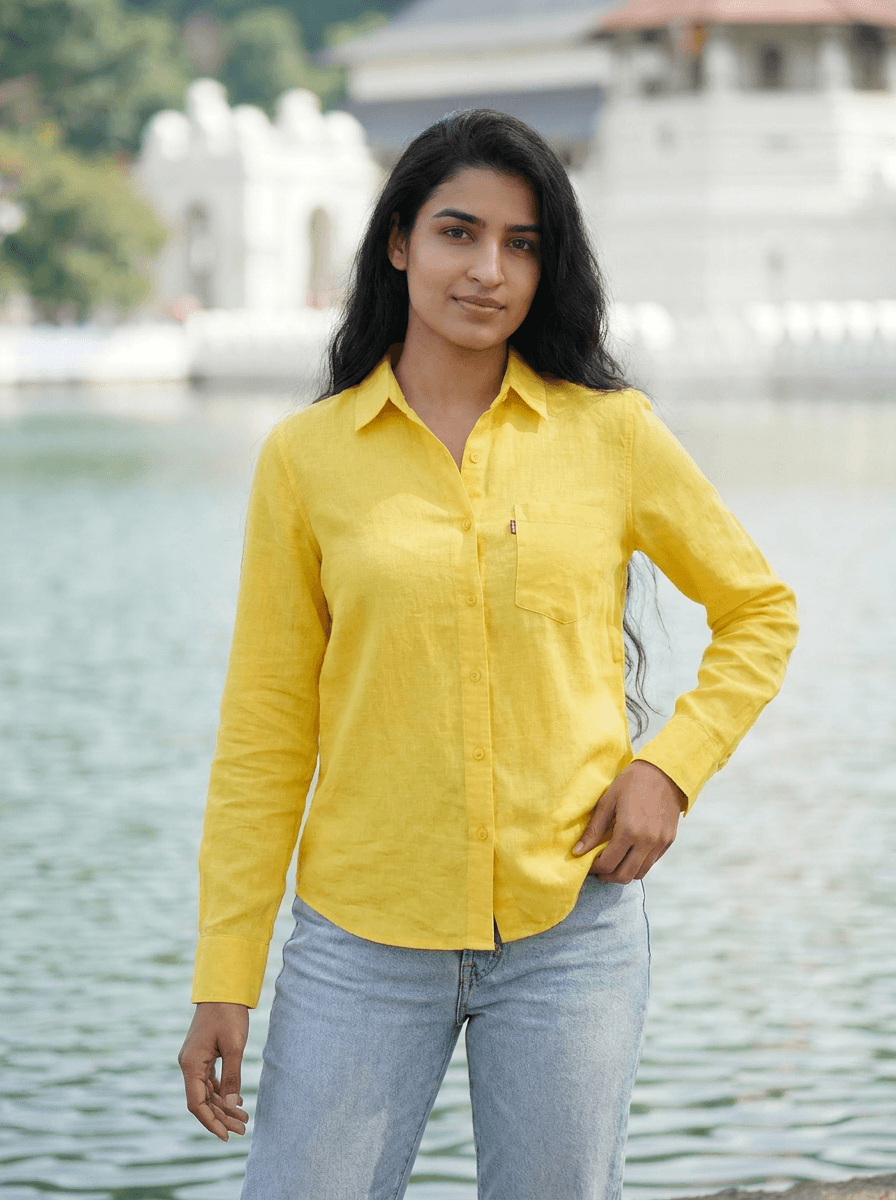
If cotton is the reliable king, linen is the effortlessly cool queen of the tropics. Made from the fibres of the flax plant, linen is one of the oldest and most luxurious textiles in the world. It is exceptionally strong, absorbent, and dries faster than cotton, making it a superior choice for intense humidity. Its loose weave allows air to pass through easily, creating a noticeable cooling effect.
Yes, let's address the elephant in the room: wrinkles. Linen wrinkles. But we encourage you to reframe this! Those soft crinkles are a hallmark of high-quality linen, a sign of its relaxed, lived-in charm. It signals an effortless, resort-ready elegance that is perfectly at home from a Galle Fort café to a garden party.
Styling Tip: A relaxed-fit linen dress is the ultimate "one-and-done" outfit. It requires minimal styling to look incredibly put-together. Just add a pair of leather sandals and a woven tote bag, and you're ready for anything. If you're looking for that perfect blend of comfort and casual elegance, an embroidered piece like the Thea Sage Green Embroidered Linen Dress is the pinnacle of chic, breathable style.
Rayon & Viscose: The Silky, Breathable Darlings
Here’s where things get interesting. Rayon and viscose are often called semi-synthetic because they are manufactured, but they originate from a natural source: wood pulp. This unique production process gives them the best of both worlds. They are exceptionally breathable and moisture-absorbent like natural fibres, but they also have a fluid drape and silky-smooth feel that mimics more expensive fabrics like silk.
These fabrics are fantastic for creating movement in a garment. Think of a flowy midi skirt that billows as you walk or a wide-leg palazzo pant that feels cool and breezy. They are lightweight and don't trap heat, making them an excellent answer to the question of **what to wear in the heat** when you want to feel a little more dressed up.
Care Tip: Be gentle with your rayon and viscose pieces. They can be weaker when wet, so a cold, gentle machine wash or hand washing is best. Always air dry to maintain their shape and silky texture.

Beyond the Basics: Other Smart Fabric Choices for Sri Lanka
While cotton, linen, and viscose are your primary allies, the world of textile innovation has given us a few more incredible options that are perfect for our climate. Keeping an eye out for these on clothing labels can unlock a new level of comfort.
Modal & Tencel™ (Lyocell): Eco-Conscious Comfort
Modal and Tencel™ (a brand name for lyocell) are modern marvels in the fabric world. Like rayon, they are derived from wood pulp (beech trees for Modal, eucalyptus for Tencel™) but are often produced in an environmentally-friendly closed-loop process where water and solvents are recycled. What does this mean for you? An incredibly soft, smooth fabric that feels amazing on the skin.
Here’s why they are brilliant for Sri Lanka:
- Cool to the Touch: These fabrics have a naturally cool feel against the skin.
- Exceptional Moisture Management: They are even more absorbent than cotton, wicking moisture away from the body efficiently.
- Silky Smooth: Their smooth fibre surface is gentle on sensitive skin and drapes beautifully.
Cupro: The Vegan Silk
Want the luxurious look and feel of silk without the associated heat-trapping and delicate care? Meet cupro. It's a regenerated cellulose fabric made from a part of the cotton plant that is usually discarded, so it's also a win for sustainability. Cupro breathes and regulates temperature like cotton, but it has the elegant sheen, beautiful drape, and slippery-smooth feel of silk. It’s a perfect choice for dressy blouses, slip dresses, and elegant evening wear for those warm tropical nights.
Fabric Blends: The Best of Both Worlds?
You'll often see blends in modern clothing, like "Cotton/Polyester" or "Linen/Viscose." Blends are created to combine the positive attributes of different fibres. For example, adding a little polyester to cotton can reduce wrinkling and increase durability. Adding viscose to linen can soften it and improve its drape.
The key is to read the label and check the percentages. A blend can be a great option as long as the dominant fibre is a breathable one.
- Do: Look for blends like 80% Cotton / 20% Polyester or 70% Viscose / 30% Linen. You get the breathability of the natural fibre with a little added performance.
- Don't: Be wary of items where the synthetic fibre is the majority (e.g., 80% Polyester / 20% Cotton). These will likely not be comfortable for all-day wear in the heat.
The Fabric "Blacklist": What to Avoid in the Sri Lankan Heat
Just as important as knowing what to look for is knowing what to avoid. Seeing these fabrics on a label should be a red flag when shopping for everyday wear in our climate. While they may have their place in specific types of clothing (like activewear or raincoats), they are generally a recipe for discomfort.
Polyester: The Sweat Trap
Polyester is essentially a plastic fabric. It is non-absorbent and not breathable. Wearing polyester in the heat is like wrapping yourself in a thin layer of plastic wrap. It traps heat and moisture against your skin, creating a personal "greenhouse effect" that can leave you feeling hot, sticky, and uncomfortable. While it's popular in fast fashion for its low cost and wrinkle resistance, we advise keeping it to an absolute minimum or reserving it strictly for air-conditioned environments.
Nylon & Acrylic: The Synthetic Overload
Similar to polyester, nylon and acrylic are synthetic fibres that offer zero breathability. They are known for trapping heat and odour, making them particularly ill-suited for a humid climate where you're likely to perspire. While a nylon-spandex blend is great for your swimwear, it has no place in your everyday blouses or dresses.
Heavy, Tight Weaves: The Hidden Culprits
Sometimes, the problem isn't the fibre itself, but the way it's woven. Even a 100% cotton garment can be a sweat-fest if it's a heavy, tightly woven fabric like thick canvas or traditional heavy denim. These dense weaves prevent air from circulating, defeating the purpose of the breathable fibre.
The Light Test: A great way to check a fabric's breathability, even when shopping online and looking at detailed photos, is to imagine holding it up to a light. Can you see light filtering through the weave? If so, it’s a good sign. If it’s completely opaque and dense, it will likely trap heat. Opting for a dress made from a lighter cotton weave, like this beautiful Azure Blue Printed Cotton Midi Shirt Dress, ensures you're choosing a piece designed for airflow and comfort.

Dressing Smart: How Silhouette and Colour Complete the Picture
Choosing the right fabric is 80% of the battle, but the other 20%—cut and colour—can make all the difference in your overall comfort. A breathable fabric in a tight, restrictive style is a missed opportunity!
Let It Flow: The Power of a Loose Fit
This is simple physics. Tight clothing traps a layer of warm air and moisture right against your body. Loose-fitting clothes, on the other hand, allow for constant airflow. As you move, the garment moves away from your skin, allowing air to circulate underneath, which helps sweat evaporate and provides a natural cooling mechanism.
Embrace silhouettes that float, skim, and flow:
- A-line and smock dresses
- Wide-leg trousers and culottes
- Oversized or "boyfriend" style shirts
- Tiered and gathered maxi skirts
- Kaftans and relaxed-fit tunics
Lighten Up: The Colour Theory of Cool
You learned this in school, and it holds true for fashion: dark colours absorb more light and convert it into heat, while light colours reflect light and heat. While we all love a chic black outfit, wearing a black dress on a sunny 32-degree day is a conscious choice to be warmer. For maximum coolness, build your daytime wardrobe around a palette of whites, creams, beiges, soft pastels, and light earthy tones. Save your dark, dramatic colours for the evening or for pieces made from the most feather-light, breathable fabrics you can find.
Frequently Asked Questions (FAQ)
Is silk a good fabric for the heat in Sri Lanka?
This is a tricky one. While silk is a natural protein fibre, it's not the best for high heat and humidity. It's not very absorbent and can show moisture stains easily. It also tends to trap some heat. For a similar luxurious feel with better breathability, we recommend choosing cupro or a high-quality viscose instead.
What about denim? Can I wear jeans in Sri Lanka?
Traditional, heavy denim is one of the least breathable fabrics you can wear. However, not all denim is created equal. Look for "lightweight denim" or jeans made from a blend of cotton and Tencel™, which are much softer and more breathable. Chambray is also an excellent alternative that gives you a denim look without the weight. A loose-fitting pair of lightweight denim trousers or a chambray dress can definitely work.
Are 100% cotton clothes always the best choice?
Mostly, yes! But as we discussed, the weave matters. A very thick, heavy 100% cotton canvas will be hotter than a lightweight linen/viscose blend. It's about looking at both the fibre content AND the construction of the fabric. The "light test" is your best friend!
How can I tell if a fabric is breathable when shopping online?
This is the key challenge of online shopping! First, meticulously read the product description for the "fabric composition." Look for the keywords we've discussed: cotton, linen, viscose, rayon, Tencel™, modal. Second, look at the photos. Does the fabric look like it drapes and flows, or does it look stiff and structured? Close-up shots can reveal the texture of the weave. Finally, trust retailers who understand our climate and curate their collections accordingly.
Is it better to have lined or unlined dresses for the heat?
It depends on the lining! A dress lined with a cheap, static, polyester lining will turn it into a sweatbox, no matter how breathable the outer fabric is. However, a dress that is "self-lined" (lined with the same lightweight fabric) or lined with a thin, 100% cotton voile can be very comfortable. A good lining prevents a sheer dress from being see-through without sacrificing breathability.