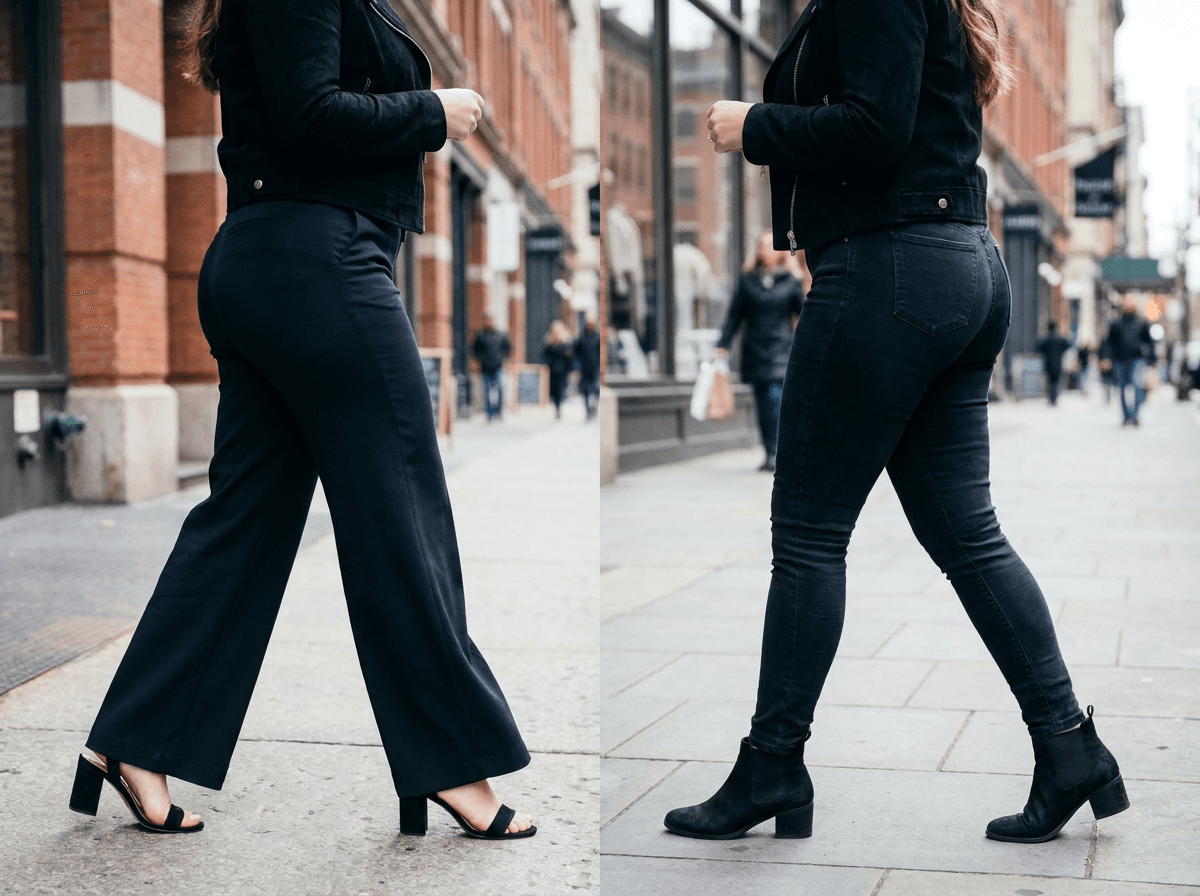
There’s a unique thrill to online shopping. The endless scroll, the discovery of a perfect dress, the satisfying click of ‘Add to Cart’. But for every moment of joy, there's a potential moment of disappointment. We’ve all been there: the dress that arrives looking nothing like the picture, the fabric that feels cheap and scratchy, or the fit that’s just… wrong. It’s enough to make anyone wary of browsing for women's fashion online.
But what if you could trade that uncertainty for confidence? What if you could become an expert at spotting high-quality, long-lasting pieces from just a screen? Here in Sri Lanka, where our vibrant lifestyle demands clothes that are both stylish and practical, making smart choices online is more important than ever. This is your ultimate guide to cutting through the noise and learning how to spot quality clothes, transforming your digital window shopping into a masterclass of smart purchasing. Let's put an end to buyer's remorse and avoid online shopping mistakes for good.

The Fabric File: Decoding Materials for the Sri Lankan Climate
The single most important factor determining a garment's comfort, longevity, and look is its fabric. In a tropical climate like Sri Lanka's, with its persistent heat and humidity, the right material isn't just a preference—it's a necessity. A beautiful dress made from the wrong fabric can quickly become a sticky, uncomfortable nightmare. Here’s your definitive fabric quality guide for online shopping.
Natural Fibres: Your Best Friends in the Heat
When the sun is high and the air is thick, natural fibres are your salvation. They are generally more breathable and absorbent than their synthetic counterparts, allowing air to circulate and wicking moisture away from your skin.
-
Cotton: The undisputed king of comfort. It's soft, breathable, and hypoallergenic.
- What to Look For: Seek out descriptions like "100% Cotton," "Cotton Poplin" (a crisp, smooth weave perfect for shirts and dresses), or "Cotton Lawn" (a lightweight, silky-smooth fabric ideal for blouses). On zoomed-in photos, high-quality cotton should have a tight, even weave without looking fuzzy.
-
Linen: The epitome of relaxed, tropical elegance. Linen is exceptionally strong, breathable, and gets softer with every wash. Yes, it wrinkles, but that's part of its charm.
- What to Look For: Descriptions will say "100% Linen" or "Linen Blend" (often with cotton or viscose to reduce wrinkling). Close-up shots will reveal a characteristic "slub"—small, natural variations in the thread thickness that give it texture. This is a sign of authentic linen, not a flaw.
-
Viscose & Rayon: These are semi-synthetic fibres derived from natural wood pulp. They are prized for their silk-like feel and beautiful drape.
- What to Look For: Excellent for flowy dresses and blouses that move with you. They are incredibly lightweight and feel cool against the skin. The product description is key here. Be aware they can be prone to wrinkling and may require more delicate care (like hand washing).
Smart Synthetics & Blends: Don't Dismiss Them
Synthetics often get a bad rap, but modern textile technology has produced some fantastic options that are perfect for a contemporary wardrobe. Blends, in particular, can offer the best of both worlds.
-
Polyester (and its cousins Crepe & Georgette): The workhorse of modern fashion. High-quality polyester is durable, wrinkle-resistant, and holds colour beautifully.
- What to Look For: Avoid cheap, shiny-looking polyester. Look for descriptions like "Polyester Crepe" or "Georgette," which have a matte, textured finish and a lovely drape. These are fantastic for office wear and occasion dresses as they travel well and require minimal ironing.
- Elastane (or Spandex/Lycra): This isn't a standalone fabric but a crucial addition. A small percentage (2-5%) blended with cotton, polyester, or viscose adds stretch and comfort, helping a garment keep its shape. It’s the secret to a perfect fit in tailored pants or a fitted top.
- Tencel™ (Lyocell): A premium, eco-friendly fibre made from eucalyptus trees. It's a dream for our climate—softer than silk, cooler than linen, and highly absorbent. It's wrinkle-resistant and drapes beautifully. If you see Tencel in a product description, it’s a strong sign of a quality-conscious brand.

Red Flags in Fabric Descriptions
Just as important as knowing what to look for is knowing what to avoid. Be skeptical if you see:
- Vague Language: Terms like "imported fabric," "premium blend," or "synthetic mix" with no further details are a red flag. A good retailer knows their materials and is proud to share the specifics.
- Unbelievably Low Prices: A dress listed as "100% Silk" for the price of a casual t-shirt is almost certainly polyester. Trust your common sense. Quality materials cost more to produce.
- Photos with High Shine: If a garment that isn't supposed to be satin has a plastic-like sheen in the photos, it’s likely a very low-grade synthetic that won't breathe well.
Mastering the Fit: Your Guide to Online Clothing Sizes in Sri Lanka
This is the biggest hurdle in online shopping in Sri Lanka and everywhere else: Will it fit? The frustration of receiving a garment that’s too tight in the bust or too long in the legs is real. But you can dramatically increase your success rate by becoming a size-chart detective.
Why 'S, M, L' is Not Enough
Let’s be clear: there is no universal standard for Small, Medium, and Large. A Medium from one brand can be a Large from another. These labels are just a starting point. Your true source of information is the garment measurement chart provided on the product page. Ignore the generic "international size chart" and look for the specific measurements of the item you're buying. A trustworthy store will always provide this.
How to Measure Yourself Accurately (It Takes 2 Minutes!)
Grab a measuring tape. If you don't have one, use a piece of string or a phone charging cable and a ruler. For the most accurate reading, measure over your undergarments, not bulky clothes.
- Bust: Measure around the fullest part of your chest, keeping the tape parallel to the floor.
- Waist: Measure around your natural waistline—the narrowest part of your torso, usually an inch or so above your belly button.
- Hips: Measure around the fullest part of your hips and bottom.
Now, compare these numbers to the garment's size chart. Crucial Tip: Pay attention to whether the chart lists the "body measurement" it's intended for or the "garment's flat measurement." If it's the garment's measurement, remember to double the number for the bust, waist, and hips to get the full circumference.
Reading Between the Lines: 'Fit' and 'Style' Descriptions
The numbers are only half the story. The other half is understanding the intended silhouette. Look for these keywords in the product description:
- Slim Fit: Designed to be close to the body. There will be very little extra fabric. If you are between sizes, definitely size up.
- Regular/Classic Fit: Follows the general contours of the body with a little room for movement. This is a standard, comfortable fit.
- Relaxed Fit/Oversized: Intentionally designed to be loose and roomy. You can usually take your normal size and it will still have that comfortable, drapey look. A perfect example of this easy-going yet chic silhouette is a piece like this Relaxed Red Button-Down Shirt Dress with Pockets, which is designed for comfort without sacrificing style.
- A-Line: Fitted at the bust and/or waist, then gradually flares out towards the hem, creating an 'A' shape. This is a universally flattering fit.
- Empire Waist: The waistline is raised to just below the bust. This is a fantastic style for comfort in the heat, as it doesn't constrict the waist and flows freely over the hips.
The Devil is in the Details: Spotting Quality Construction Online
A well-made garment will not only look better, but it will also last infinitely longer. At first glance, it might seem impossible to judge construction from a photo, but with a keen eye and the zoom function, you can spot the hallmarks of quality craftsmanship.

Zoom In! Examining Seams, Hems, and Stitching
This is where your inner detective comes out. High-resolution product photos are a gift—use them!
- Stitching: Zoom in on the seams. The stitches should be small, straight, and evenly spaced. There should be no signs of puckering (where the fabric is gathered bunched up along the seam) or loose, loopy threads.
- Hems: Look at the bottom hem of a dress or the cuff of a sleeve. A deeper hem (an inch or more) is a sign of a higher quality garment, as it uses more fabric and helps the item hang correctly. On delicate fabrics, look for a neat, narrow rolled hem.
- Topstitching: This is the visible stitching on details like collars, cuffs, and pockets. It should be perfectly straight and even. Wobbly topstitching is a clear sign of rushed production.
Buttons, Zippers, and Embellishments
Hardware and decorations can make or break a garment. They are often a dead giveaway of its quality level.
- Buttons: Do they look like flimsy, cheap plastic? Or do they have some substance? Quality garments often use mother-of-pearl, wood, metal, or thick, quality resin buttons. Check the buttonholes—they should be neatly stitched without any fraying threads. A huge bonus is if the garment comes with a spare button.
- Zippers: On dresses and skirts, an "invisible" zipper that is seamlessly sewn into a seam is a sign of quality. For other zippers, check that they lie flat and don't buckle. Look for reputable brands like YKK if visible.
- Embroidery & Lace: This is where you can really spot the difference. Zoom right in. High-quality embroidery will be dense, neat, and the threads will have a slight sheen. It should look like an integral part of the fabric, not a cheap iron-on patch. For an example of intricate, well-crafted detailing, look at the delicate work on a piece like this Blush Pink Embroidered V-Neck Midi Dress. The quality of the embroidery speaks volumes about the overall craftsmanship of the dress.
Pattern Matching and Lining
These two details are the secret language of well-made clothing.
- Pattern Matching: On a garment with stripes, plaids, or a distinct floral print, check if the pattern lines up at the seams. The most obvious place to check is the centre front seam of a blouse or the side seams of a dress. Matching patterns requires more fabric and more skill during construction, so it's a hallmark of a brand that cares about the finished product.
- Lining: A lining is a separate layer of fabric on the inside of a garment. For skirts and dresses, especially in light colours, a lining is essential for opacity. It also helps the garment slide on easily, hang beautifully, and prevents it from clinging. A product description that mentions "fully lined" or "lined to the knee" is a very positive sign.
Beyond the Garment: Hallmarks of a Trustworthy Online Store
The product itself is key, but the store you're buying from is just as important. The way a brand presents its products and treats its customers tells you everything you need to know about the quality they stand for.
Detailed Product Descriptions Are Your Best Friend
A one-sentence description is a major red flag. A reputable online store invests time in providing you with all the information you need to make an informed decision. Look for descriptions that include:
- Full fabric composition (e.g., "70% Cotton, 30% Linen").
- Fit details (e.g., "Runs true to size," "Model is 5'7" and wearing a size S").
- Garment measurements on a detailed size chart.
- Care instructions (e.g., "Machine wash cold, hang to dry").
A Clear and Fair Returns Policy
Confidence is key. A store that offers a straightforward, easy-to-understand returns and exchange policy is a store that stands behind its products. It shows they are confident that you will love what you receive. Before you buy, quickly read their policy. Is there a reasonable window for returns? Is the process clear? This is a non-negotiable for smart online shopping in Sri Lanka.
Customer Reviews and Social Proof
Real-world feedback is invaluable. Look for product reviews on the website. Are they generally positive? Do they offer specific details about the fit and fabric? Photos from other customers are pure gold, as they show you the garment in real lighting on different body types. Also, check the brand's social media pages. Do they feature their community? Are they responsive to comments? An engaged, transparent brand is usually a trustworthy one.

Frequently Asked Questions (FAQ) for Savvy Online Shoppers
Let's tackle some of the most common questions to round out your expertise.
What's the best way to handle online clothing sizes in Sri Lanka if I'm between sizes?
When in doubt, size up. This is especially true for non-stretch, woven fabrics like cotton poplin or linen. It's always easier and cheaper for a tailor to take a garment in than to try and let it out. Also, consider the intended fit—for a "relaxed" or "oversized" style, your smaller size might be perfect, but for anything "slim-fit," sizing up is the safest bet.
How can I tell if a white or light-coloured dress will be see-through?
First, check the product description for the word "lined." If a light-coloured garment isn't lined, it's a potential risk. Second, use the zoom tool on the product photos. If you can see the shadow of the mannequin, the model's undergarments, or the hanger through the fabric, it will be sheer. Look for heavier fabrics like cotton twill, or double-layered materials like georgette.
Are "blends" (e.g., cotton-poly blend) bad quality?
Not at all! In fact, for our humid Sri Lankan climate, blends can be fantastic. A cotton-polyester blend gives you the softness and breathability of cotton combined with the durability and wrinkle-resistance of polyester. A viscose-linen blend can soften the linen and reduce creasing. The key isn't the blend itself, but the quality of the fibres being blended.
The colour online looks different from what I received. How do I avoid this?
This is a common issue as screen colours vary. A good online store will mitigate this by providing an accurate colour name in the description (e.g., "burnt orange" instead of just "orange"). Read the description carefully. If customer reviews with photos are available, check them out, as they'll show the item in various real-world lighting conditions.
What's one quick trick to spot a cheap garment online?
Examine the seams on a patterned item. A fast and easy quality check is to look at a striped or printed piece, like this Tropical Floral & Butterfly Print Blouse. Zoom in on where the main seams meet—especially the centre front, side seams, or where the sleeves join the body. If the pattern doesn't align, it means the manufacturer cut corners to save fabric. This is a tell-tale sign of fast fashion and lower overall quality.