Let’s be honest. You scroll through your Instagram feed, hearting images of fashion influencers in Paris or New York, effortlessly rocking a blazer over a turtleneck, a trench coat over a chunky knit. You save it to your "Style Inspo" board, dreaming of the day you can create such a chic, dimensional outfit. Then, you step outside into the warm, humid embrace of a Colombo afternoon, and that dream melts faster than a Bombai Motai.
The layered look is the pinnacle of chic—it screams intentionality, texture, and high fashion. But in a tropical paradise like Sri Lanka, traditional layering is less of a style choice and more of a personal sauna. So, must we resign ourselves to a life of single-layer outfits? Absolutely not.
Welcome to the world of faux layering, the ultimate style secret for the modern Sri Lankan woman. This is the art of creating the *illusion* of layers without the bulk, the weight, or the unbearable heat. It’s about being clever, strategic, and using the right pieces to get that coveted, put-together look while staying blissfully cool. This 2026 guide is your masterclass on how to layer in heat, packed with tropical styling hacks that will revolutionize your wardrobe.


What is Faux Layering and Why is it a Game-Changer for Sri Lanka Fashion?
At its core, faux layering is a visual trick. It’s about using specific garments, textures, and styling techniques to suggest multiple layers where there's really only one or one-and-a-half. Think of it as smart, climate-appropriate styling that gives you the aesthetic of a layered outfit without the thermal consequences. While a true layered look in London might involve a tee, a cashmere sweater, and a wool coat, the Colombo equivalent is a single, cleverly designed piece or a combination of ultra-lightweight items.
For fashion-conscious women across Sri Lanka, from the bustling streets of the capital to the breezy coasts of Galle, this technique is nothing short of revolutionary. It allows us to participate in global trends, express our personal style with more depth, and look polished and professional, even when the humidity is at 100%.
The Psychology of a Polished Look
Why do we even crave layers in the first place? Because they add visual interest, depth, and complexity to an outfit. A single t-shirt and jeans can be stylish, but add a third piece—like a vest or an open shirt—and the outfit instantly feels more complete, more intentional. Layers break up the silhouette, draw the eye, and create interesting lines and textures. Faux layering allows us to tap into this sartorial psychology without sacrificing our physical comfort.
Fabric is Your First and Last Word
Before we dive into techniques, let's establish the golden rule of tropical styling: fabric is everything. The success of any faux layering attempt hinges on your choice of material. Heavy fabrics like wool, thick denim, and fleece are non-starters. Your new best friends are fabrics that breathe.
- Cotton: A timeless classic. Look for poplin, voiles, and eyelet cotton. They are lightweight, absorbent, and soft on the skin.
- Linen: The undisputed king of hot-weather fabrics. It’s incredibly breathable, durable, and has a naturally relaxed, chic texture. Yes, it wrinkles, but that’s part of its charm.
- Rayon & Viscose: These semi-synthetic fabrics mimic the feel of silk but are more affordable and breathable. They drape beautifully, making them perfect for flowy "outer" layers.
- Tencel/Lyocell: Known for being exceptionally soft, sustainable, and moisture-wicking, Tencel is a fantastic choice for base layers and lightweight tops.
- Sheer & Open-Weave Fabrics: Chiffon, georgette, organza, and pointelle knits offer texture and coverage without trapping any heat, making them perfect for a top "layer."
When you're building your faux layered look, ensure that every single piece, from your base layer to your "third piece," is made from one of these breathable champions.
The Art of Illusion: Core Faux Layering Techniques
Ready to become a master of sartorial deception? These core techniques form the foundation of faux layering. They are simple, effective, and perfectly suited for the Sri Lankan climate.
Technique 1: The Open-Shirt Over a Top
This is the most accessible and versatile faux layering trick in the book. It involves wearing a lightweight button-down shirt open, like a jacket, over a simple base layer. The key is that the "jacket" adds no more heat than a whisper of fabric.
How to do it:
- Start with a simple, fitted base layer. A cotton tank top, a simple camisole, or a fitted tee in a neutral colour works best.
- Choose an oversized or relaxed-fit button-down shirt in a supremely lightweight fabric. A crisp White Embroidered Eyelet Cotton Blouse is an incredible option, as the perforations provide built-in ventilation. Linen or light-as-air rayon are also perfect choices.
- Wear the shirt completely unbuttoned. You can roll up the sleeves to your elbows to enhance the casual, cool vibe.
- For a different silhouette, try tying the front tails of the shirt at your natural waist. This creates definition and is perfect for pairing with high-waisted trousers or skirts.
Technique 2: The Power of the Vest and Sleeveless Blazer
Want to add structure and a touch of formality without sleeves? Enter the vest. Sleeveless blazers, longline vests, and even tailored denim vests are your secret weapon for creating a sharp, layered silhouette without adding any arm-sleeve heat.
How to do it: A long, sleeveless blazer in a light colour (like beige, white, or pastel) worn over a simple silk shell top and tailored trousers is a killer modern office look. It’s professional, powerful, and keeps you cool during your commute. For a more casual weekend look, try a denim vest over a simple white t-shirt dress.
Technique 3: The "Two-for-One" Piece
This is the ultimate hack—where the garment does all the work for you. Two-for-one pieces are designed to look like multiple items but are actually a single, clever garment. They are the definition of effortless style.
Look for these styles:
- Dresses with built-in collars: A dress that has a contrasting collar sewn in gives the perfect illusion of a crisp shirt layered under a pinafore or shift dress. It's a preppy, polished look with zero bulk. The Vintage Style Red Sleeveless Corduroy Dress with Collar perfectly nails this aesthetic, giving you a layered appearance in one easy, sleeveless piece.
- Tops with attached hems: You may have seen sweaters with a shirt-tail hem peeking out from the bottom. These are brilliant for cooler climates, but the tropical version is a lightweight top with a contrasting fabric hem attached, giving the look of a layered camisole underneath.
- Mock-neck tops: A simple sleeveless or short-sleeve top with a mock-neck gives the sophisticated feel of a turtleneck without the suffocating heat, perfect for layering under a sleeveless blazer.
Lightweight Layering: Mastering the "Third Piece" in the Tropics
The "third piece rule" in styling suggests that adding a third element to a top-and-bottoms combo (like a jacket, blazer, or vest) elevates the entire look. In Sri Lanka, our third piece just needs to be a lot more strategic and a lot less insulated.
The Sheer Genius of Open Weaves
Don't underestimate the power of texture. A sheer or transparent layer can add incredible dimension and a touch of modesty or drama without adding any warmth. Think of a sheer black chiffon blouse worn open over a black camisole and trousers for an elegant evening look. It’s alluring, sophisticated, and perfectly breezy.
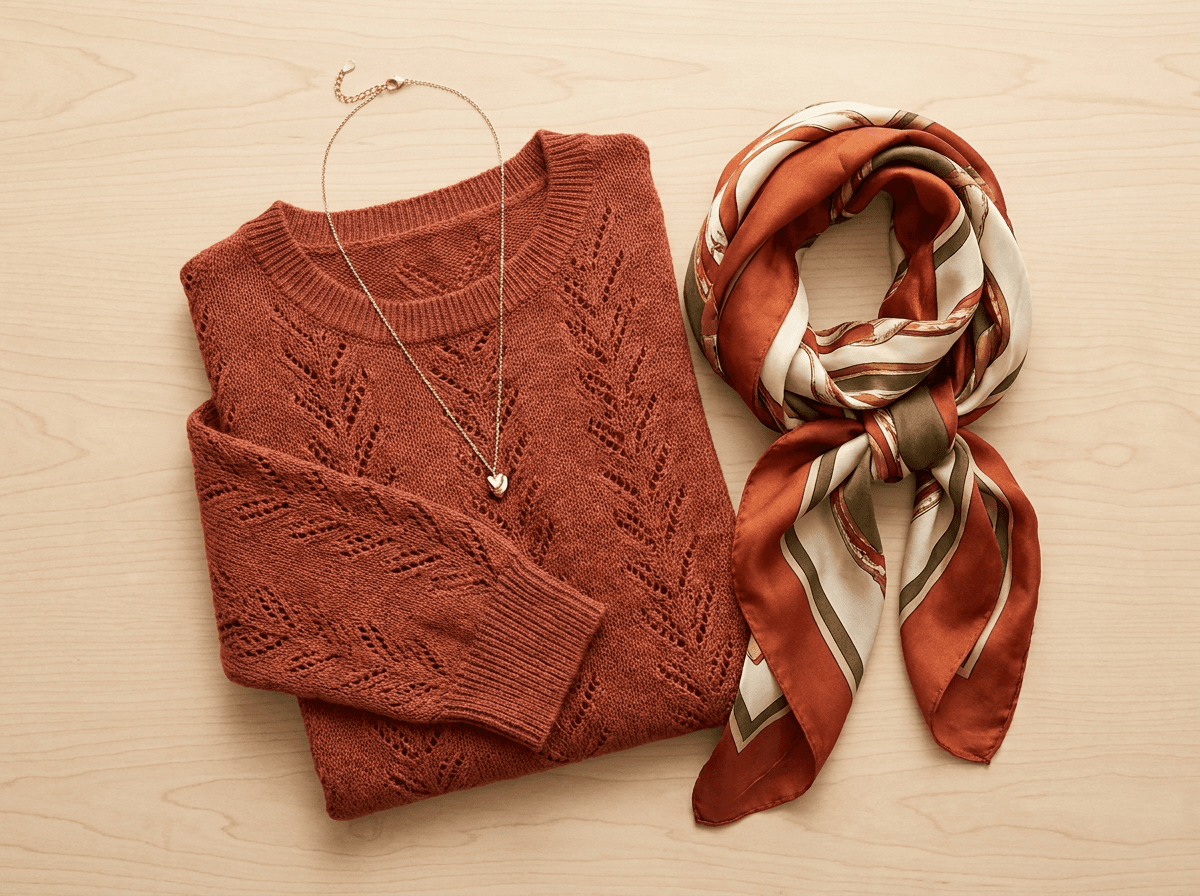
Another fantastic option is an open-weave knit. Forget chunky wool; we're talking about pointelle knits. These are lightweight sweaters with decorative holes or patterns knitted into the fabric. A short-sleeve Rust Pointelle Knit Short Sleeve Top gives you the cozy texture of a sweater but the breathability of a mesh top. It's the perfect way to wear a "sweater" in 30-degree weather.
The Scarf: Your Most Versatile Layer
A large, lightweight scarf in silk, cotton, or modal is a layering powerhouse. It's a chameleon that can transform your outfit in seconds. Of course, you can drape it loosely over your shoulders for when you step into a fiercely air-conditioned mall or cinema, but its true power lies in its versatility.
- As a Belt: Thread a colourful silk scarf through the belt loops of your jeans or trousers for a pop of colour and pattern.
- As a Top: On a hot beach day, a large square scarf can be folded and tied into a chic bandeau top.
- As a Hair Accessory: Tie it around your ponytail or use it as a headband for a touch of bohemian flair.
- On Your Bag: Instantly elevate a simple handbag by tying a scarf around the handle.
The Strategic Drape: Kimonos and Kaftans
Long, flowy, and made from feather-light fabrics like chiffon, rayon, or silk blends, kimonos and kaftans are the ultimate tropical third piece. They provide drama, movement, and a bit of coverage from the sun without clinging to the body. Throw one over a simple tank top and shorts to instantly elevate your look from basic to boho-chic, or use it as a stylish cover-up over your swimsuit on your next trip down south.
Accessory Layering: The Coolest Layers You'll Ever Wear
Sometimes, the best way to achieve a layered look has nothing to do with clothing. Shifting your focus to accessories is a brilliant way to add depth and detail to your outfit without adding a single degree of heat. This is accessory layering, and it’s a crucial part of the modern Sri Lankan style lexicon.
Jewellery Stacking: Your Personal Signature
Think of your décolletage and wrists as a blank canvas. Layering delicate jewellery is an art form that adds a personalized, curated feel to any outfit.
- Necklaces: The "neck mess" is a trend for a reason. Start with a short, delicate choker, add a slighter longer chain with a small pendant, and finish with a longer chain that sits just above your top's neckline. The key is to vary the lengths, textures, and weights to create a balanced, interesting look.
- Bracelets: Create a "wrist stack" by combining different styles. Mix a delicate chain bracelet with a beaded one, a simple bangle, and perhaps your smartwatch. It tells a story and adds a focal point to your arm.
- Rings: Don't be afraid to wear multiple rings across both hands. Mix fine, delicate bands with one or two slightly chunkier statement rings for a modern, eclectic vibe.
Belts, Bags, and Hats: The Structural Layers
These functional accessories are also powerful layering tools. A well-chosen belt can cinch the waist of a loose dress, creating a new silhouette and the illusion of a two-piece outfit. A structured tote bag doesn't just carry your essentials; its form and shape act as a solid "piece" against your body, adding structure to a flowy outfit. And a wide-brimmed hat? It's the ultimate top layer—stylish, sun-safe, and an instant statement-maker.
Frequently Asked Questions (FAQ)
Can I really wear a "sweater" in Sri Lanka's heat?
Yes, but with a major caveat! Forget traditional wool or cashmere. When we talk about sweaters for a tropical climate, we mean pieces made from open-weave or pointelle knits, often in cotton or light synthetic blends. These have a sweater-like texture but are full of perforations that allow for maximum airflow. Think of them as "ventilated sweaters"—all the texture, none of the heat.
What are the absolute best fabrics for faux layering in high humidity?
Your holy trinity of fabrics will be linen, lightweight cotton (especially eyelet or voile), and rayon/viscose. Linen is unparalleled for its breathability. Eyelet cotton has built-in air conditioning with its perforations. Rayon and viscose drape beautifully, don't cling, and feel cool against the skin, making them perfect for flowy outer layers like kimonos or unbuttoned shirts.
I'm worried faux layering will make me look bulky. How do I avoid that?
The key is to play with proportions and fabric weight. If your outer "layer" (like an open shirt or a vest) is loose or oversized, make sure your base layer is fitted. This contrast creates a streamlined silhouette. Also, stick to fabrics that drape rather than cling. A flowy rayon kimono will add drama without bulk, whereas a stiff, boxy jacket (even a sleeveless one) might add unwanted volume.
Is the faux layering trend appropriate for a professional office setting in Sri Lanka?
Absolutely! It's arguably more professional than a single, flimsy top. A sleeveless blazer or a structured, longline vest over a silk shell top is a perfect example of office-appropriate faux layering. It looks sharp, polished, and powerful. Another great option is a high-quality dress that has a built-in collar, giving the impression of a layered shirt and dress with the ease of one piece.
My skin gets easily irritated in the heat. What's the best faux layering technique for me?
If your skin is sensitive, the best approach is to minimize fabric-on-skin contact. The "open shirt" method is excellent, as the outer layer barely touches you. Even better, focus on accessory layering. Add visual interest with stacked, delicate necklaces, a beautiful silk scarf tied to your handbag, and a statement belt. This allows you to achieve a complex, layered look with zero extra fabric on your body.